
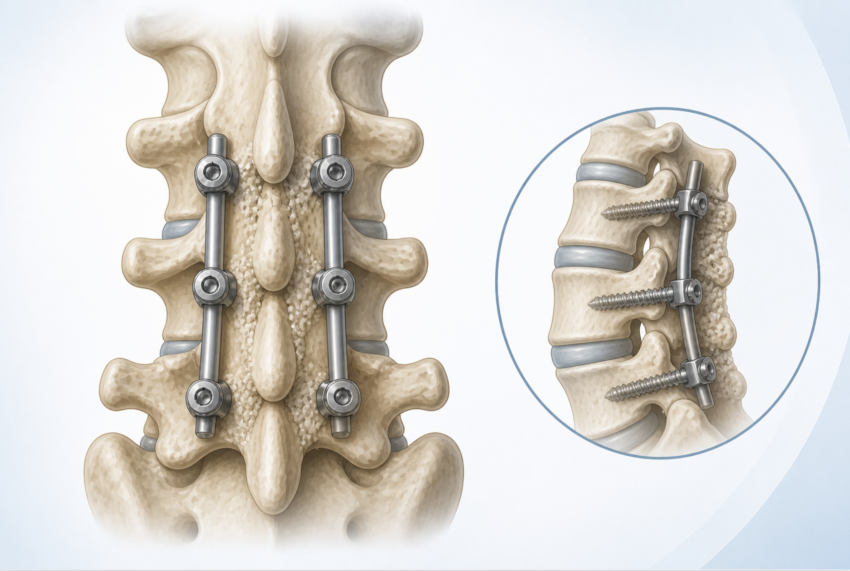
What Is Posterior Spinal Fusion?
Posterior spinal fusion is a surgical procedure that stabilizes the spine by connecting two or more vertebrae using screws, rods, and bone graft.
When Is It Considered?
This procedure may be considered in patients with:
- Spondylolisthesis
- Spinal Instability
- Degenerative Disc Disease
- Spinal Stenosis with instability
- Recurrent disc herniation
What Does It Treat?
Posterior spinal fusion stabilizes the spine and relieves pain caused by abnormal motion, nerve compression, or structural instability.
What to Expect
The procedure is performed through an incision in the back. Screws and rods are placed to stabilize the spine, and bone graft is used to promote fusion between the vertebrae.
In some cases, posterior spinal fusion is performed following an Anterior Lumbar Interbody Fusion (ALIF) to enhance stability and support fusion.
Most patients are able to return home the same day, depending on the extent of surgery and individual recovery.
Next Steps
An in-person evaluation is needed to determine if this procedure is appropriate for your condition.