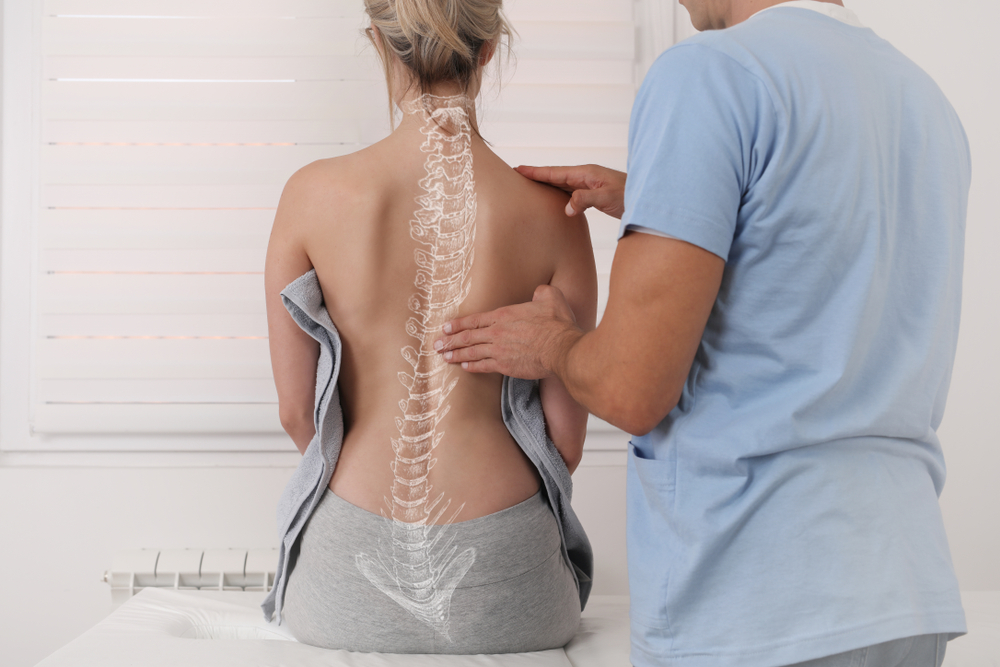
The spine naturally has gentle curves that help support the body and allow for normal movement and balance. Scoliosis and kyphosis are conditions that occur when these natural spinal curves become abnormal.
These spinal deformities can affect posture, alignment, and in more severe cases may contribute to pain, reduced mobility, or nerve-related symptoms. At Ocean Spine, Dr. Pranay Patel evaluates spinal alignment disorders and recommends treatment options based on the severity of the condition and the patient’s symptoms.
Understanding Spinal Curvature
A healthy spine contains natural curves when viewed from the side. These curves help distribute weight and allow the spine to move efficiently.
When the spine curves excessively or in the wrong direction, it can lead to structural imbalance and altered biomechanics.
Two common spinal curvature conditions are scoliosis and kyphosis.
What Is Scoliosis?
Scoliosis is a condition in which the spine curves sideways, often forming an “S” or “C” shape when viewed from behind.
In many cases scoliosis develops during adolescence, though it can also occur in adults due to degenerative changes in the spine.
Common physical signs of scoliosis may include:
- Uneven shoulders
- One shoulder blade appearing more prominent
- Uneven hips or waistline
- A visible curve in the spine
- Leaning slightly to one side
Mild cases may produce few noticeable symptoms, while more significant curvature may affect posture and spinal alignment.
What Is Kyphosis?
Kyphosis refers to an excessive forward curvature of the upper spine, often resulting in a rounded upper back.
In mild cases this may appear as poor posture or slouching. More severe kyphosis can lead to a noticeable rounding of the upper back and may cause pain or stiffness.
Causes of Scoliosis
Many cases of scoliosis are idiopathic, meaning the exact cause is unknown. However, several factors may contribute to spinal curvature, including:
- Congenital spinal abnormalities
- Neuromuscular conditions
- Degenerative changes in the spine
- Genetic predisposition
In adults, scoliosis may also develop due to degenerative changes in the spinal joints and discs.
Causes of Kyphosis
Kyphosis can develop for several reasons, including:
- Degenerative changes in the spine
- Osteoporosis and vertebral compression fractures
- Congenital spinal abnormalities
- Poor posture
- Certain neuromuscular conditions
Diagnosis and Treatment
Evaluation of scoliosis or kyphosis typically begins with a physical examination and imaging studies, such as X-rays, to measure the degree of spinal curvature.
Treatment depends on the severity of the curvature and the symptoms experienced by the patient. Options may include:
- Observation and monitoring
- Physical therapy
- Bracing in certain cases
- Surgical treatment for severe or progressive deformities
When to Seek Evaluation
At Ocean Spine, Dr. Pranay Patel evaluates patients with spinal alignment disorders and develops individualized treatment plans based on the patient’s symptoms, imaging findings, and overall spinal health.
If you are experiencing persistent back pain, noticeable spinal curvature, or changes in posture, an evaluation may help determine the underlying cause and guide appropriate treatment.